The Cost of a Static Office: Why Workspaces Must Continuously Evolve
Traditional corporate offices treat workspace design as a one-time capital expense. Discover how static environments contribute to cognitive fatigue and how rotational curations restore workplace vitality.
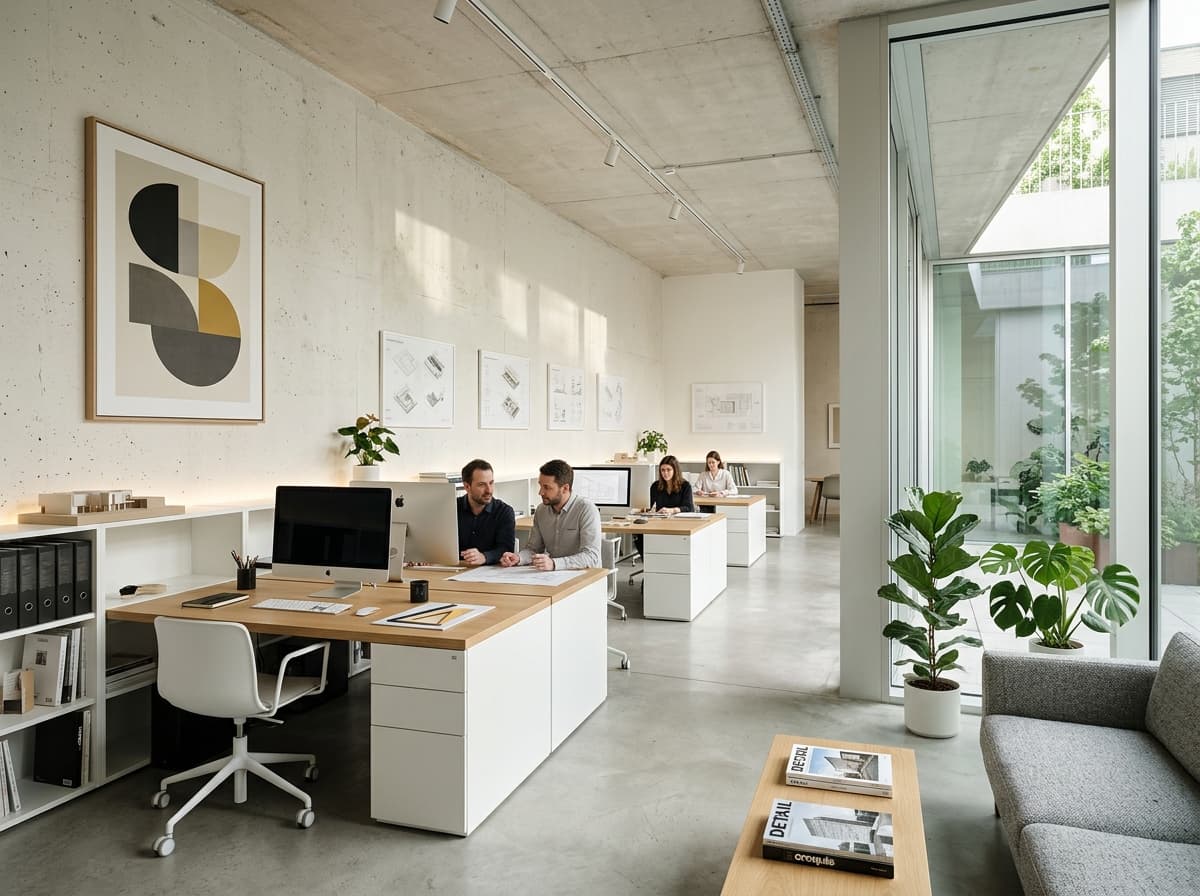
Most offices are designed once.
A budget is set, a designer is hired, walls are painted, art is hung, furniture arrives. Then the project ends — and the space stops. Not physically, but in every way that matters: it stops reflecting who the company is becoming, stops surprising the people who walk through it every day, stops being noticed at all.
This is the quiet cost of a static workplace. Not a single failure, but a slow one.
Employees stop seeing it. The brain is extraordinarily good at filtering out what doesn't change. Within weeks, artwork that once drew comment becomes wallpaper. A space designed to inspire becomes a space simply occupied.
Creativity has nowhere to draw from. Environments shape thinking more than most teams give them credit for. A room that hasn't changed in three years isn't feeding anyone's next idea — it's just the backdrop to work that increasingly happens despite the space, not because of it.
First impressions quietly age. A reception area that impressed a client eighteen months ago is now simply what the office looks like — to a candidate deciding between offers, to a visiting partner sizing up the company, to a new hire on day one. The space is still communicating something. It's just no longer communicating what the company wants it to.
And replacing it is treated as a last resort. Because the usual model is binary — keep the existing décor indefinitely, or absorb another full capital project to replace it — most companies simply wait. The frozen office remains frozen, because the alternative feels expensive and disruptive, even when the cost of staying static is the one nobody's tracking.
None of this is really about art or design. It's about a workplace's ability to keep pace with a business that is, itself, never static. Teams grow, culture shifts, ambitions change — and the physical space they spend a third of their lives in stays exactly as it was the day it opened.
This is the problem ARTNCE was built around: not "how do we design a better office," but "why does office design stop the moment it's finished?" Workspace experience shouldn't be a single decision made once and left alone. It should be able to evolve at the same pace as the company inside it — without every change requiring a new capital project, a new vendor search, a new six-month initiative.
That reframe — from a one-time purchase to a continuously managed experience — is the starting point for everything else we do.
Evolve your workspace every quarter.
Schedule a spatial consultation to explore rotational curations and managed styling for your office.